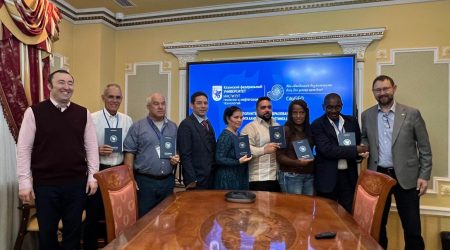
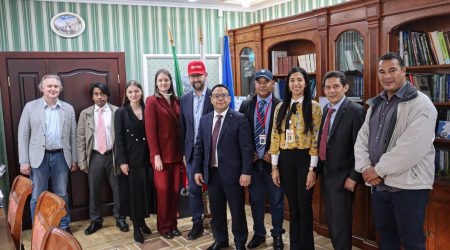
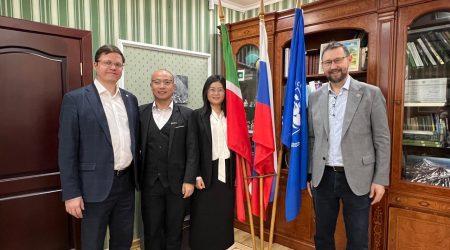
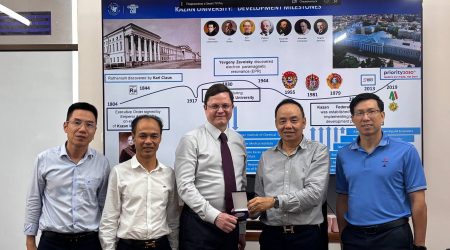
Institute presented to Anand Kamavisdar, Counsellor for Science and Technology at the Embassy of India in Russia
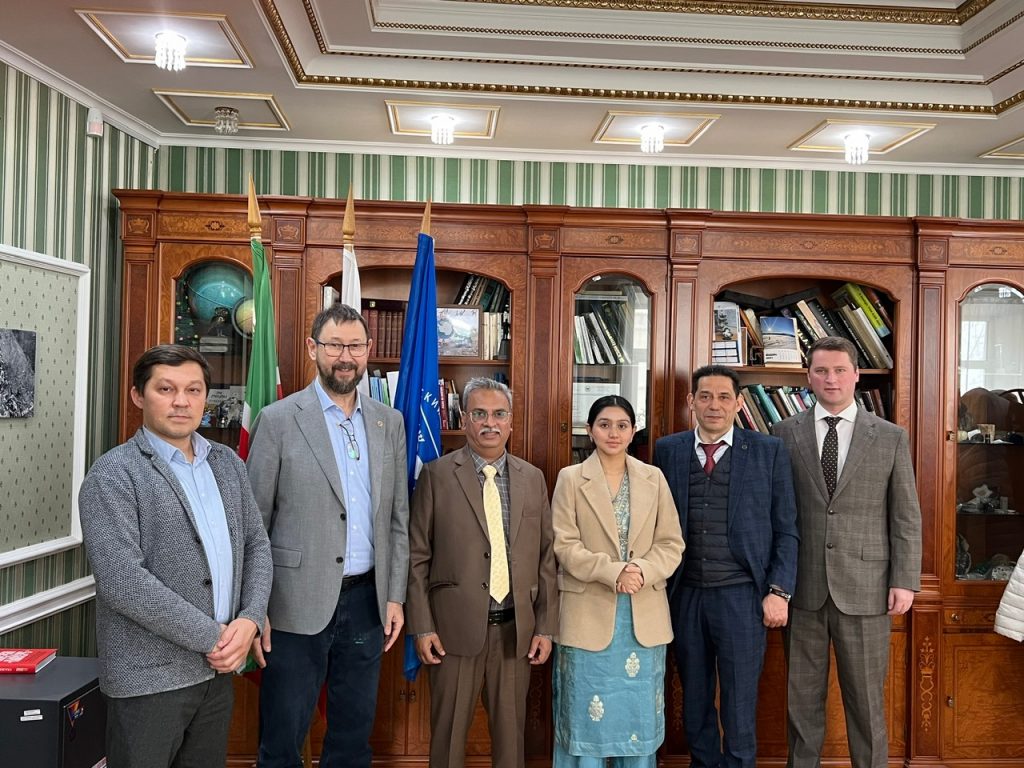
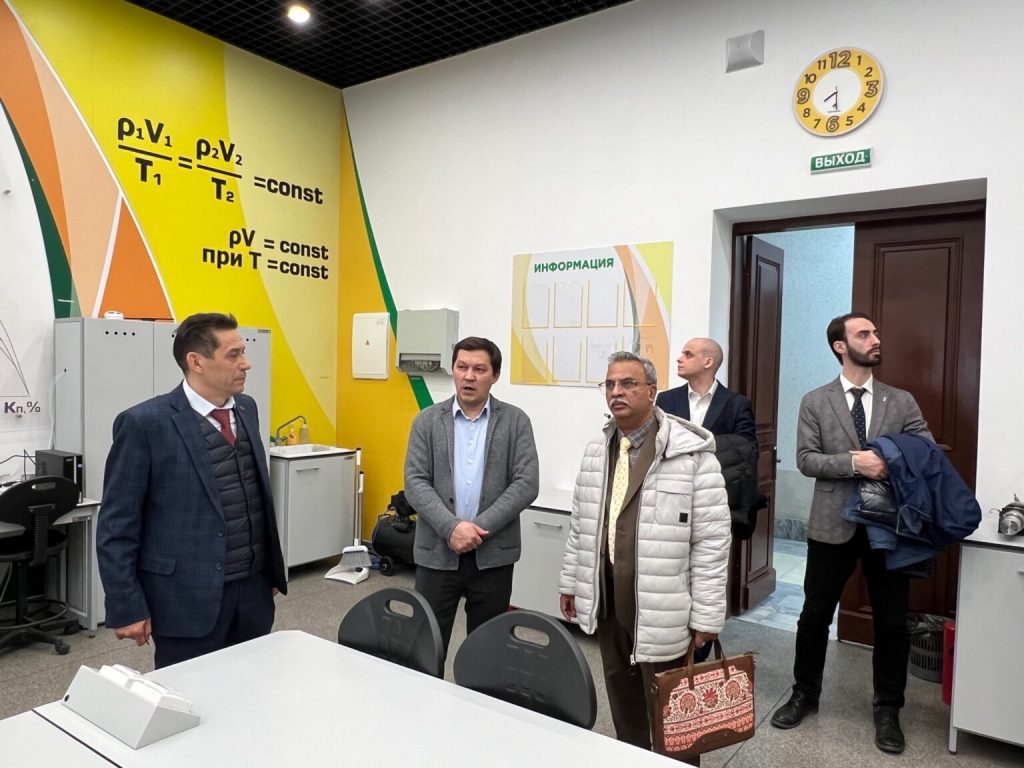
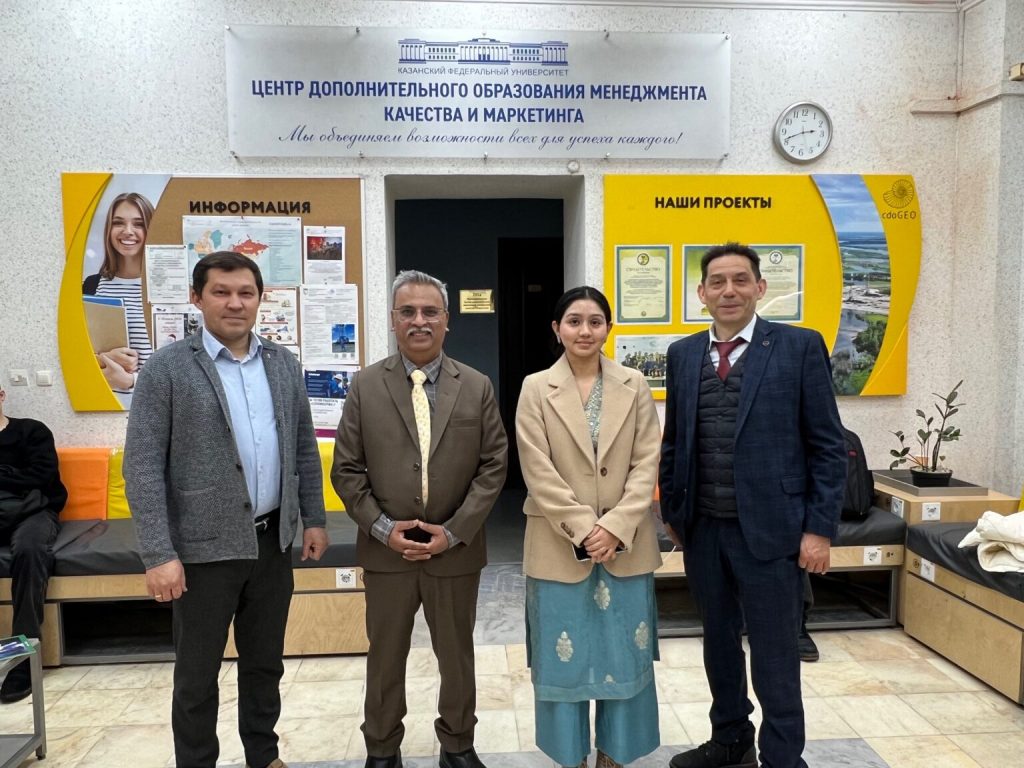
During a tour of Kazan Federal University, Anand Kamavisdar visited the Institute of Geology and Petroleum Technologies.
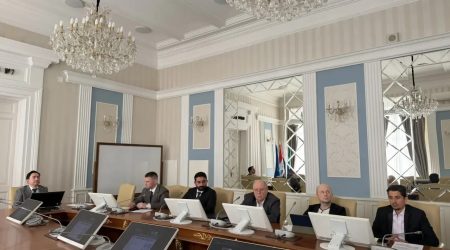
Representing the Institute, the meeting was moderated by Danis Nurgaliev, Vice-Rector for Earth Sciences. Participants included Pavel Krylov, Deputy Director for Research; Ildus Chukmarov, Deputy Director for Continuing Education and Industrial Partnerships; Vladislav Sudakov, Deputy Director for Marketing at the Gazpromneft-KFU Scientific and Educational Center; and Yury Nurmeev, International Cooperation Officer.
University representatives presented the Institute to the distinguished guest, including information on its structure, student population, ongoing projects, innovative developments, and programs at the Center for Advanced Training.
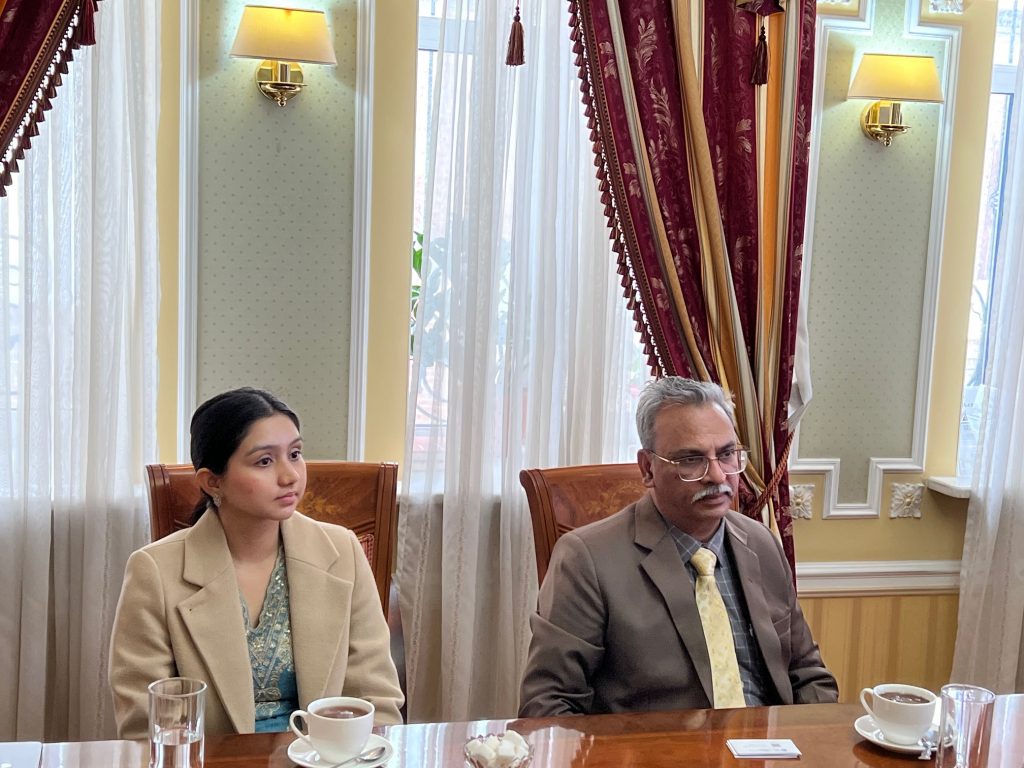
During the meeting, prospects for international cooperation in various fields were discussed. Following this, Anand Kamavisdar toured the Institute’s laboratories and visited the 3D GEO Center.
“I saw that your laboratories are well-equipped. This helps you conduct research at the cutting edge of science. It is important that the institute not only provides a strong fundamental education and trains postgraduate students, but also develops and creates innovative products for industrial partners. KFU’s infrastructure fully meets the requirements necessary for developing cooperation,” the Counsellor told the media. “The main issue we discussed at an earlier meeting with representatives of Kazan University’s management was the upcoming joint grant program. We plan to announce Russian Science Foundation competitions aimed at supporting Russian-Indian projects. This issue is currently being coordinated between the Russian Science Foundation and the Ministry of Science and Technology of the Republic of India. I would also like to note that we are open to student and faculty exchanges. Regarding the institute’s continuing education programs, we will await full details to share with companies and educational institutions in India.”
Dr Sudakov reported, “Currently, some of our scientists are working with Indian universities. Joint scientific and educational grants are a good tool for making work in this area more systematic. An Embassy representative reported that there are groups of scientists in India working on the same scientific problems as us. He is eager to facilitate our joint research.”