KFU testing new reagent capable of making oil move faster

A new enhanced oil recovery reagent, a thermally stable surfactant peptizer, developed at the Institute of Geology and Petroleum Technologies, has successfully undergone field trials at the Aksyonovskoye heavy oil field in Samara Oblast.
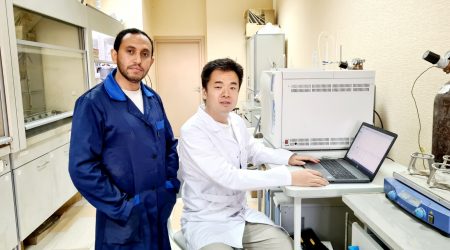
The substance was synthesized by researchers of the In-Situ Combustion Lab.
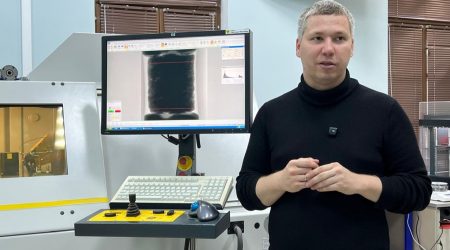
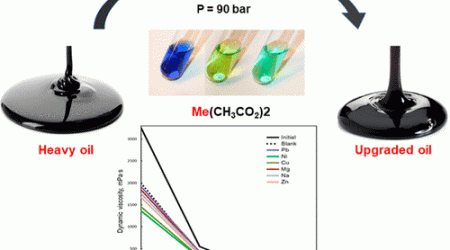
“The new reagent, under conditions of steam-assisted thermal treatment of a heavy oil reservoir, disrupts asphaltene aggregates. This phenomenon is known as peptization. It is asphaltenes that determine the low mobility of oil in the porous reservoir medium,” explained Alexey Vakhin, Head of the In-Situ Combustion Laboratory. “The transformation of asphaltenes occurs through the cleavage of carbon–heteroatom bonds. This leads to a reduction in their molecular weight, which in turn increases oil mobility and, consequently, oil recovery.”
According to the researchers, such reagents have not previously been used in Russia for the production of hard-to-recover liquid hydrocarbons, which account for more than 60% of current reserves.
“The peptizer was synthesized using medium-molecular-weight polyglycols and polypropylene glycol as feedstock, which demonstrated high efficiency in laboratory studies. The transformation of asphaltenes into lower-molecular-weight aliphatic and aromatic hydrocarbons results in a 1.5-fold reduction in viscosity,” noted Temurali Kholmurodov, Junior Researcher at the laboratory.
Comprehensive laboratory studies conducted at KFU confirmed the effectiveness of the peptizer.
“Following this, scale-up procedures were carried out, and a pilot batch of the asphaltene peptizer was produced. Domestic raw materials were used for its industrial-scale production,” reported Oibek Mirzaev, Junior Researcher at the laboratory.
The laboratory studies and pilot production were carried out under a contract with LUKOIL.
“The first field trial of the peptizer took place in late June of this year at a field in Samara Oblast operated by RITEK-Samara-Nafta. During the trial, the peptizer was injected into the reservoir prior to steam injection,” added Alexey Vakhin.
A study published in the journal Neftyanoe Khozyaystvo presents the results of investigating the effect of the thermally stable surfactant peptizer developed at Kazan Federal University on the physicochemical properties of high-viscosity oil from the Aksyonovskoye field under pilot field conditions. The findings demonstrate that the new reagent enhances the efficiency of steam-based heavy oil recovery methods.
Further work is planned to evaluate peptizers of varying compositions across different heavy oil fields. A program of field trials has already been developed for sites in the Timan–Pechora region.