Research news

KFU testing new reagent capable of making oil move faster

A new enhanced oil recovery reagent, a thermally stable surfactant peptizer, developed at the Institute of Geology and Petroleum Technologies, has successfully undergone field trials at the Aksyonovskoye heavy oil field in Samara Oblast. The substance was synthesized by researchers of the In-Situ Combustion Lab. “The new reagent, under conditions of steam-assisted thermal treatment of a heavy...

KFU uses in-house lab complex for gas extraction from gas hydrate pellets

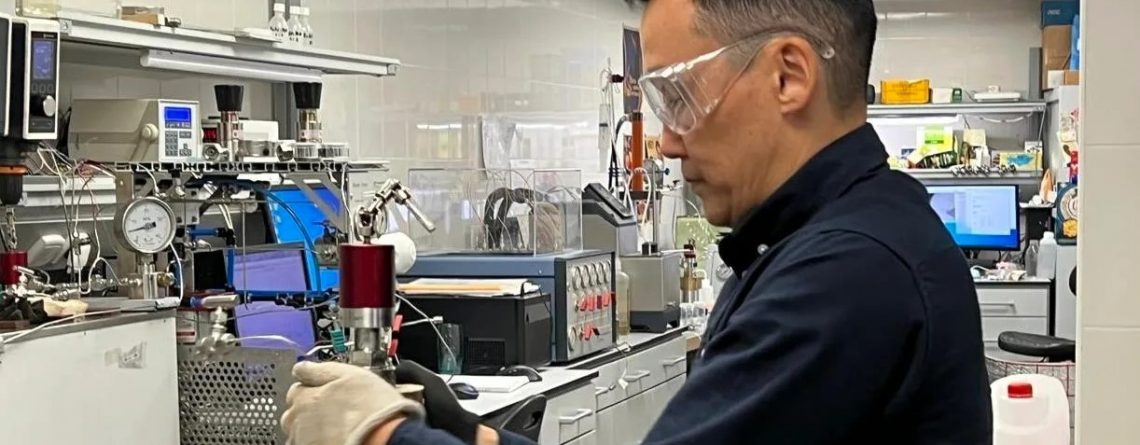
The Laboratory of Hydrate Technologies for Greenhouse Gas Storage and Utilization has developed a laboratory complex that can produce, press, and test gas hydrates, as well as manage the process of gas extraction from them. Ahead of Inventor and Innovator Day, celebrated on June 27, we spoke with the creator of this scientific complex, Matvey Semyonov,...

KFU scientists continue inquiries into promoter properties of castor oil

A castor oil-based biopromoter developed by researchers at the Laboratory of Hydrate Technologies for Greenhouse Gas Utilization and Storage at the Institute of Geology and Petroleum Technologies allows for the long-term stabilization of associated petroleum gas hydrate granules. “Billions of cubic meters of associated petroleum gas are flared annually in oil-producing regions – this is both...

KFU researchers study enhanced oil recovery with ultrasound stimulation

“Our technology is based on a systematic consideration of poroelastic, filtration, and physicochemical processes occurring in a saturated porous medium under the influence of an elastic wave field. It differs from existing empirical approaches by providing a rigorous physical and mathematical justification and experimental verification,” informs Ruslan Kemalov, Associate Professor of the Department of Oil, Gas, and...

KFU scientists describe new mechanisms of hydrate formation with various surfactants

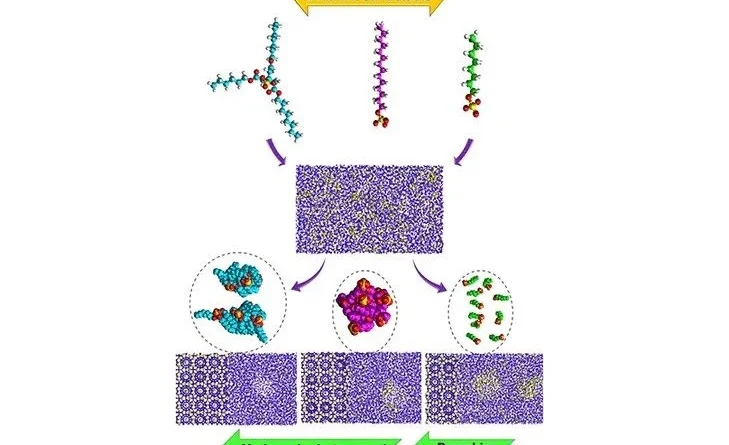
Gas hydrates look like ordinary snow or ice, but they burn readily. This is due to gas molecules securely "packed" within a crystal lattice composed of water molecules. These compounds form at high pressure and low temperature and have great potential as containers for the safe storage and transportation of methane, hydrogen, and carbon dioxide....

IGPT scientists continue research of promoters for enhanced methane hydrate formation

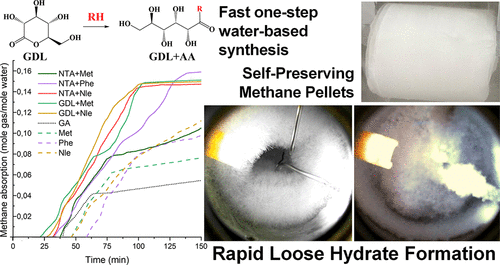
The new paper describes promoters of hydrate formation based on amino acids and gluconic acid. Shamil Gainullin, a junior research associate at the Laboratory of Hydrate Technologies for Greenhouse Gas Utilization and Storage, discussed the advantages of storing and transporting natural gas as gas hydrates and a new "growth stimulator" developed at KFU for these solid,...

KFU scientists show that nickel compound can convert heavy oil into light oil in the reservoir

Scientists from the Institute of Geology and Petroleum Technologies, together with colleagues from Yemen and Mexico, have developed a mathematical model describing the transformation of sulfur-containing compounds during the upgrading of heavy oil in the reservoir. It confirmed the high efficiency of the nickel-containing catalyst they had previously developed. The results of the study, supported by a...

KFU’s work in petroleum science presented at two conferences

The Tatarstan Academy of Sciences hosted the opening of the scientific and practical conferences Geodynamics and Oil and Gas Prospects of Sedimentary Basins and Petrophysics XXI, co-organized by Kazan Federal University, the Academy, and Tatneft. Participants in the events, held as part of the International Scientific Days and dedicated to the 35th anniversary of the founding...

Kazan Federal University scientists established patterns of distribution of rare and rare-earth elements in ancient rocks

Scientists from the Department of Paleontology and Stratigraphy have identified patterns in the distribution of rare and rare-earth elements in the Visean terrigenous and coal-bearing deposits of the Melekess Depression (Kama Coal Basin, Volga-Ural subregion). The obtained results are presented in an article published in the Vestnik of the North-East Scientific Center of the Far-Eastern Branch of...

Kazan Federal University scientists discover how to optimize geological exploration work by studying the strontium isotope content in conodonts

Scientists from the Institute of Geology and Petroleum Technologies (IGPT) have refined the strontium curve for the Devonian marine layers of the Volga-Ural oil and gas basin by investigating the strontium isotope content in conodonts—the tooth-like remains of small, free-swimming marine predators. The conodont elements, consisting of minerals from the apatite group, were selected from the...