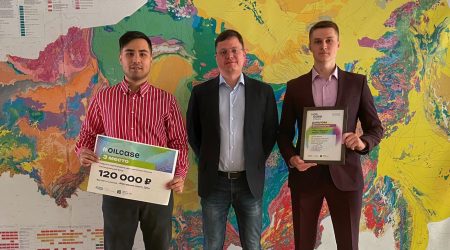
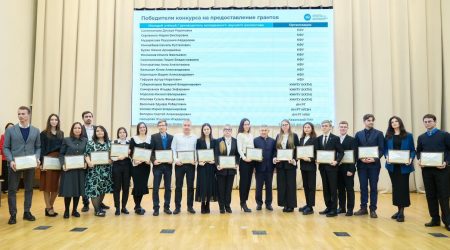
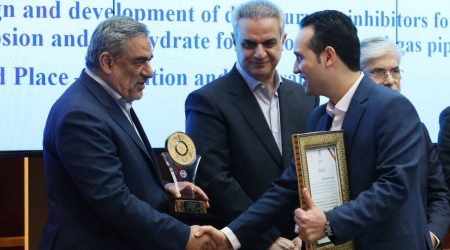
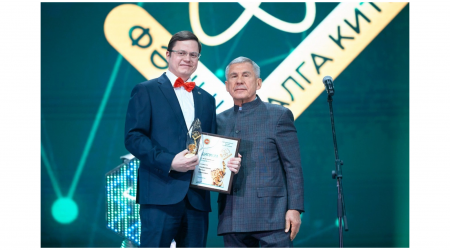
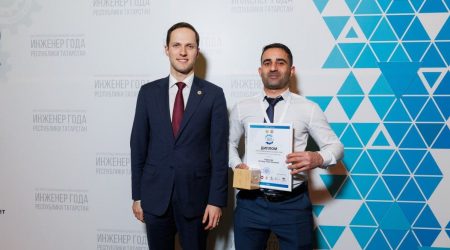
Vladislav Sudakov and Alexey Vakhin among winners of the Government of Russia Award in Science and Technology
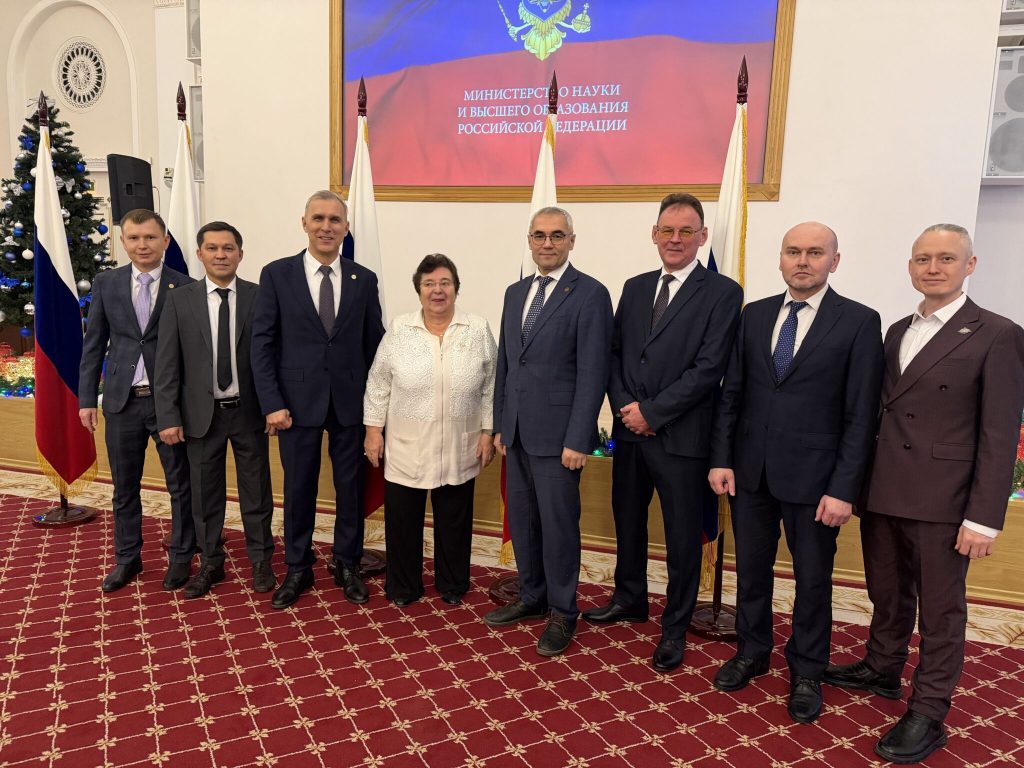
The two KFU employees and their colleagues from Tatneft were awarded for the development and implementation of innovative technologies for in-situ upgrading and efficient heavy oil production from complex reservoirs.
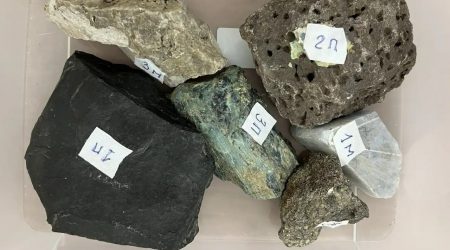
Since 2014, scientists and specialists from Kazan Federal University have been working to improve the efficiency of extra-viscous oil (EVO) production by upgrading it directly in the reservoir during the production stage. During this time, hundreds of laboratory experiments and dozens of pilot injections were conducted under a wide variety of geological conditions, using a wide range of catalysts and thermal stimulation of unconventional hydrocarbon deposits. The subjects of the study included EVO deposits in terrigenous and carbonate reservoirs in the Republic of Tatarstan, the Samara Oblast, Cuba, Venezuela, Colombia, China, Canada, and source rocks on all continents.
The technology has been most widely applied at Tatneft, thanks to the company’s extensive experience in producing extra-viscous oil, its unique infrastructure, and its world-class specialists. Today, Tatneft is the undisputed leader in the development of extra-viscous oil and natural bitumen deposits not only in Russia but also globally.
“I congratulate Alexey Vakhin and Vladislav Sudakov, as well as the large team of employees from the Institute of Geology and Petroleum Technologies and PAO Tatneft, who participated in the development of various elements of underground oil refining technology, on receiving this prestigious award. This is a tremendous success! Essentially, a fantastic idea has been realized – a fully-fledged oil refinery has been created underground, in an oil and gas reservoir, including a catalytic aquathermolysis reactor and its monitoring system. We began implementing this idea quite a long time ago, when Kazan University received a subsidy for the implementation of integrated projects to create high-tech production (Russian Government Resolution No. 218). Between 2016 and 2018, we developed the theoretical and experimental foundations of a unique system of geological and geophysical methods for monitoring the development of ultra-viscous oil in the Permian formations of the Republic of Tatarstan, in collaboration with Tatneft. This complex was then developed within the framework of the Center for Liquid Hydrocarbons,” notes Vice-Rector for Earth Sciences Danis Nurgaliev. “Combining this technology with developments in catalytic aquathermolysis allowed the Center to create a comprehensive ‘underground oil refining’ technology, now successfully used by Tatneft, which possesses gigantic reserves of ultra-viscous oil. I believe this comprehensive technology will find application in the coming years at other companies not only in our country but also abroad, especially since we’ve already tested it in Cuba and achieved remarkable results. Next in line are Venezuela, Colombia, and China, where facilities have already been studied at the laboratory level.”
During the implementation, KFU published more than 120 articles in highly rated Russian and international journals, obtained more than 30 Russian and foreign patents, created new equipment for geophysical research, and synthesized fundamentally new reagents for enhancing oil recovery from hard-to-recover hydrocarbons—aquathermolysis catalysts.
“These catalytic systems are injected into the reservoir during steam-assisted treatment of the deposit. We were the first in Russia to receive patents for this type of reagent. Subsequently, a technology for the industrial production of new reagents for enhanced oil recovery was developed,” explains Dr Vakhin. “The first field tests of in-situ catalytic systems took place in 2018 at the Ashalchinskoye field. In 2024, work began on adapting aquathermolysis catalysts for steam-assisted gravity drainage technology.”
KFU scientists continue to develop these technologies – they have proposed a new approach to upgrading heavy oil using steam-assisted treatment of the deposit, based on the peptization of asphaltene aggregates with heat-resistant surfactants.
“This approach can be combined with our previously developed aquathermolysis catalysts or implemented independently. The destruction of asphaltene aggregates under hydrothermal conditions in the steam chamber provides the conditions for the catalytic activity of the mineral components of the reservoir rock,” explained Vakhin.
He added that Russian patents have already been obtained for a number of heat-resistant surfactant asphaltene peptizers.
“An important task in heavy oil production is monitoring the formation and distribution of the steam chamber, which directly impacts production efficiency. We have developed such a monitoring system at our institute. Its essence lies in the installation of stationary high-precision sensors in appraisal wells. The geophysical instruments we have developed enable monitoring with the required frequency and provide timely recommendations for adjusting development parameters. Most highly viscous oil fields in Russia have a complex structure, which prevents their effective development using traditional steam-thermal methods. We have developed a fundamentally new approach to the development and monitoring of such deposits,” noted Vladislav Sudakov.
He emphasized that the developed technologies are based on geophysical and geochemical methods for monitoring steam chamber development and regulating production through the use of a complex of chemical compounds.