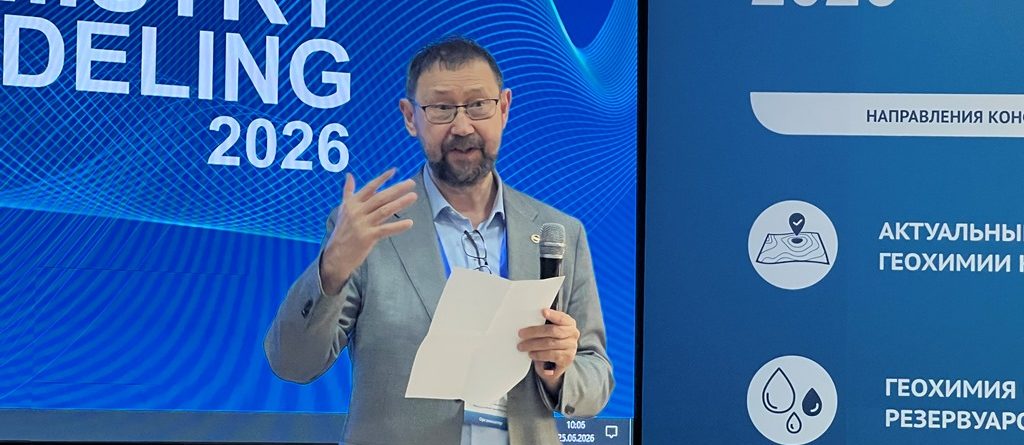
Practice Geochemistry & Modeling 2026 held at Institute
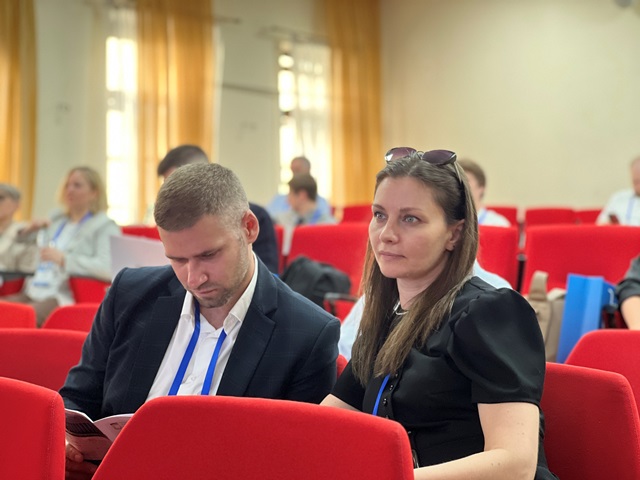
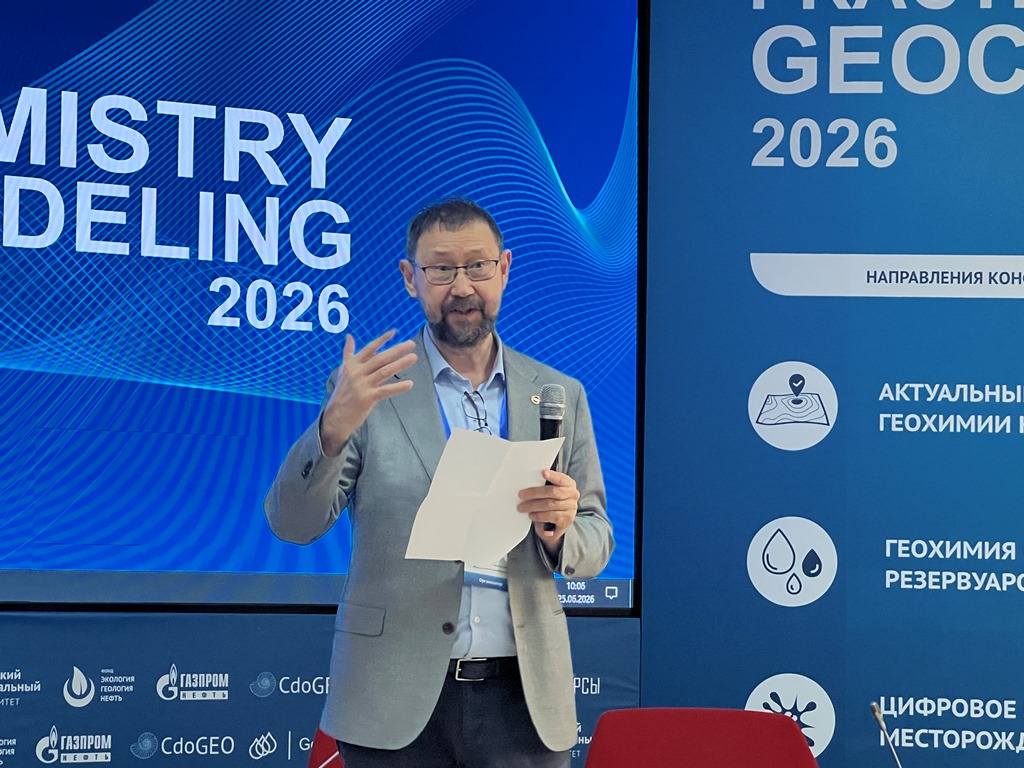
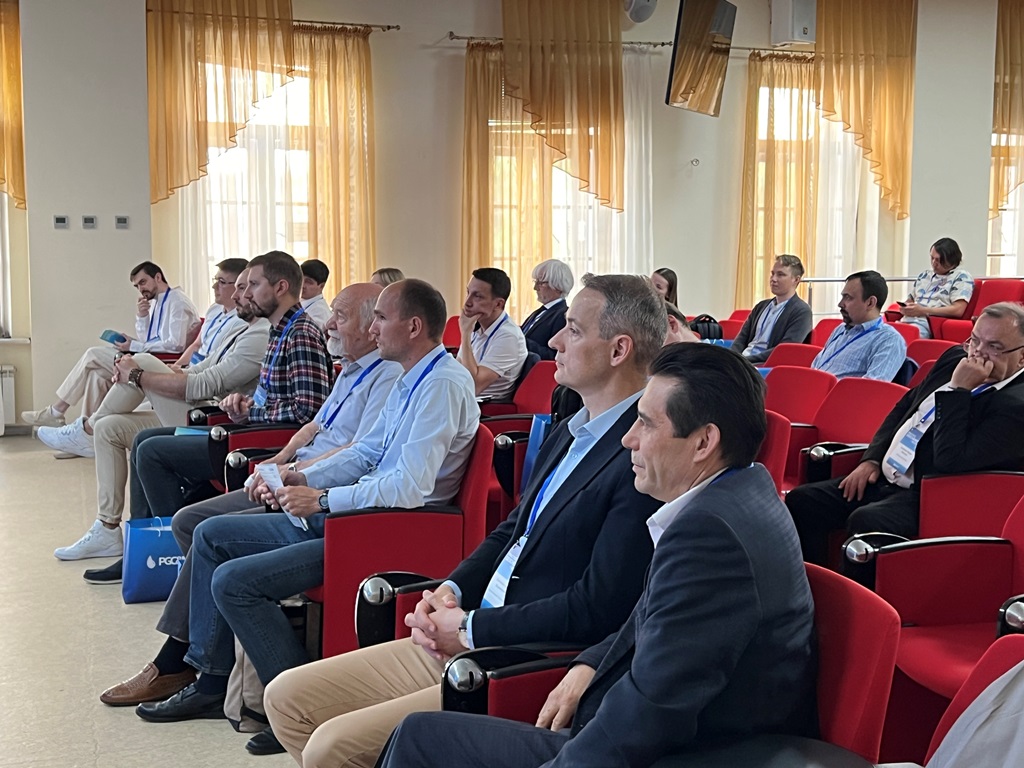
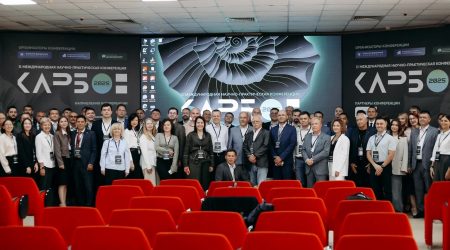
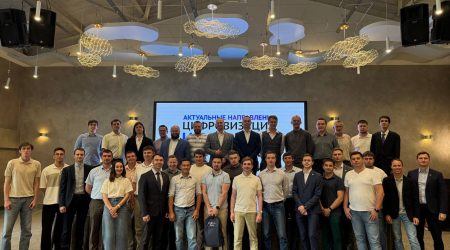
The conference brings together representatives of the scientific community, students, postgraduate researchers, and professionals from the oil and gas industry from Russia, Kazakhstan, and Kyrgyzstan.
The conference serves as a platform for the exchange of practical experience, discussion of new scientific and technological solutions, and the development of collaboration between academic institutions and industrial companies. Among the participants are researchers from KFU, Moscow State University, the Academy of Sciences of the Republic of Tatarstan, the Higher School of Economics, the Skolkovo Institute of Science and Technology, Perm State University, as well as representatives of major oil and gas companies, including NOVATEK, Rosneft, Gazprom Neft, LUKOIL, Zarubezhneft, Surgutneftegaz, and Tatneft.
Over the course of two days, participants discuss how geochemical research, digital modeling, and IT can be applied to address practical challenges in the exploration, prospecting, and development of oil and gas fields.
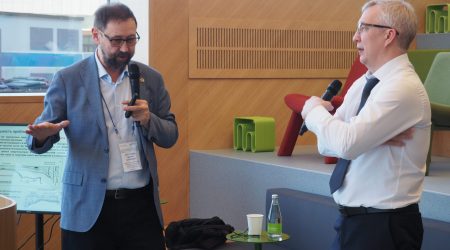
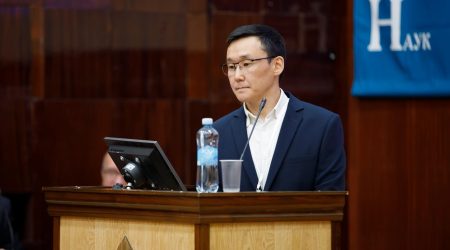
At the opening ceremony, welcoming remarks were delivered by Vice-Rector for Earth Sciences at Danis Nurgaliev; Deputy Director for Marketing of the Gazprom Neft–KFU Research and Education Center Vladislav Sudakov; Head of the Hydrodynamic Modeling Development Project at Gazprom Neft Sergey Kaigorodov; and Deputy Director for Continuing Education and Industrial Partnerships of IGPT Ildus Chukmarov.
“The goal of our conference is a challenging one – to integrate practical geochemistry with practical hydrodynamics, and possibly also reservoir management,” noted Dr Sudakov.
In his address, Vice-Rector Nurgaliev emphasized the most relevant topics to be discussed and expressed confidence that interaction among participants would foster the emergence of new ideas and collaborative projects.
“Today, geochemistry is becoming a key tool in the study and management of petroleum systems as a whole – from hydrocarbon generation to production,” he stated. “The field incorporates artificial intelligence technologies; geochemistry is being integrated into hydrodynamic models, and geochemical data are successfully used at all stages of reservoir modeling and field development.”
According to Nurgaliev, in the coming years the use of geochemical data in oil production management will become standard practice both in Russia and globally, with Russia having the potential to assume a leading position in this area.
“The conference once again brings together specialists in geochemistry, hydrogeology, and hydrodynamic modeling. At first glance, these areas may seem unrelated, but in reality, the most effective and innovative solutions often emerge at the intersection of disciplines,” said Mr Kaigorodov.
He emphasized that open dialogue between established experts and young researchers is a key driver for generating new ideas, approaches, and the implementation of advanced technologies in field development.
“When designing the conference program together with colleagues from KFU, we strive to include not only presentations but also discussions, pitch sessions, and masterclasses. This year, we have added a business simulation game and expanded the sections to enable broader participation,” he noted.
During his remarks, Ildus Chukmarov encouraged participants to engage in further collaboration and invited them to take part in continuing education programs at the CdoGEO (Center for Advanced Training), including professional retraining, advanced training, and individualized internships, as well as joint development of specialized courses.
Daria Kalachyova, an expert from the Gazprom Neft research division, expressed her appreciation to Kazan Federal University for organizing the conference and noted the significant expansion of its thematic scope over the past five years.
“The conference provides an excellent opportunity for geochemists from across the country to come together and discuss current trends. In essence, it is the only platform of its kind today,” she stated.
Following the opening ceremony, a panel discussion titled Pathways for Integrating Geochemical Data into Hydrodynamic Models: Goals, Objectives, and Formats was held, moderated by Sudakov.
The conference is structured into three sections: Current Trends in Petroleum Geochemistry, Geochemistry and Hydrogeology of Oil and Gas Reservoirs, and Digital Reservoir Modeling.
Within the section Current Trends in Petroleum Geochemistry, Dmitry Kozhanov (Modeling and Monitoring of Geological Objects, Moscow) delivered a presentation titled Reconstruction of Original TOC Using Hydrogen Index and Espitalié Diagram: Methodology and Comparative Analysis. He noted that his work aims to unify approaches for reconstructing original total organic carbon (TOC) and hydrogen index values through a single calculation formula.
Today, in the section Geochemistry and Hydrogeology of Oil and Gas Reservoirs, Enver Ablya, Associate Professor at Moscow State University, is presenting a report titled Some Geochemical Paradoxes of Artificial Oil Mixtures. He emphasizes the strong alignment between the conference theme and his course Practical Petroleum Geochemistry, and highlights the interdisciplinary and dynamic nature of the event.
The first day of the conference concluded with an individual business simulation game REWIPE, organized by Oil Flow Digital, where participants managed a digital oil asset by making decisions on drilling, engineering operations, and risk management.
Today features a plenary lecture titled Modeling the Geothermal Structure of the Earth’s Crust and Catagenetic Transformation of Organic Matter as a Basis for Predicting Hydrocarbon Potential of Sedimentary Basins, delivered by Igor Ognev (KFU) and Ivan Zinchenko (Gazprom Neft). The presentation will cover methods for modeling geothermal structures based on integrated interpretation of seismic and satellite gravimetric data, Markov chain Monte Carlo (MCMC) algorithms, and surface heat flow data.
Later, two roundtable discussions are being held, Application of New Methods in Studying Elements and Processes of Hydrocarbon Systems and Geochemical Control of Field Development (moderated by Alexey Deshin, Gazprom Neft) and Artificial Intelligence and Neural Network Approaches in Hydrodynamic Modeling (moderated by Sergey Kaigorodov). The program also includes a presentation of software for analyzing oil chromatograms and chemical compounds (Geoindicator LLC) and a startup pitch session focused on oil and gas technologies.