Polar explorer Fyodor Shipulin: “When you’re in Antarctica, you really want to go where it’s summer and there is green grass”
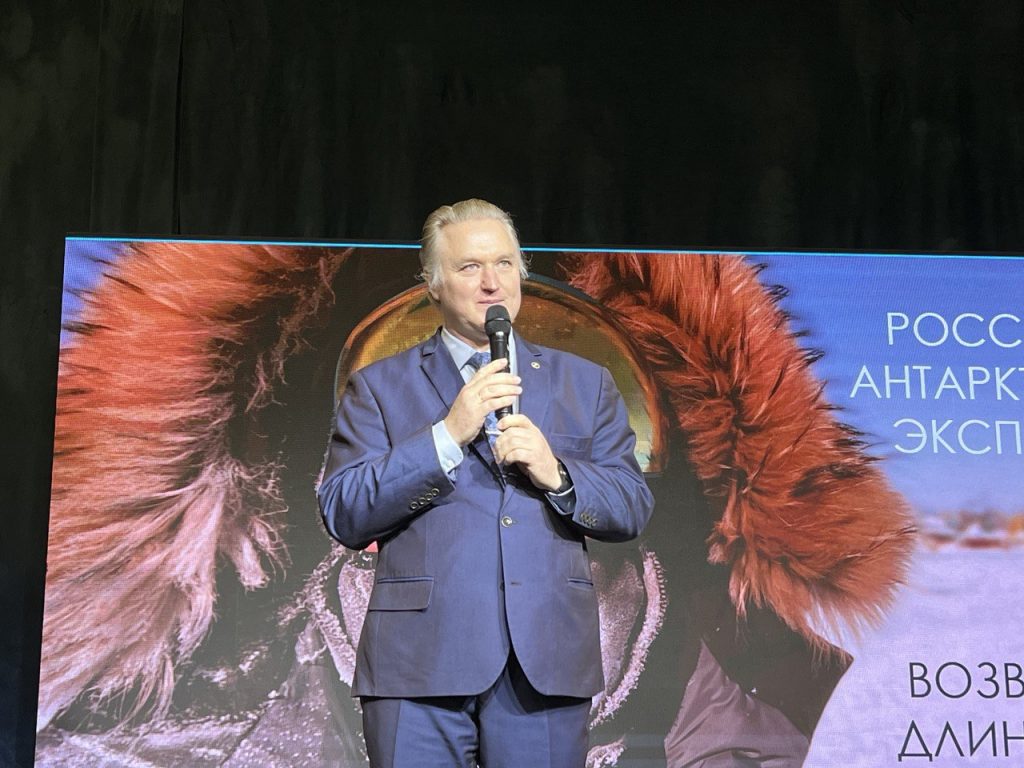
Kazan Federal University hosted a meeting with Fyodor Shipulin, an anesthesiologist and mountaineer who participated in the 69th Russian Antarctic Expedition.
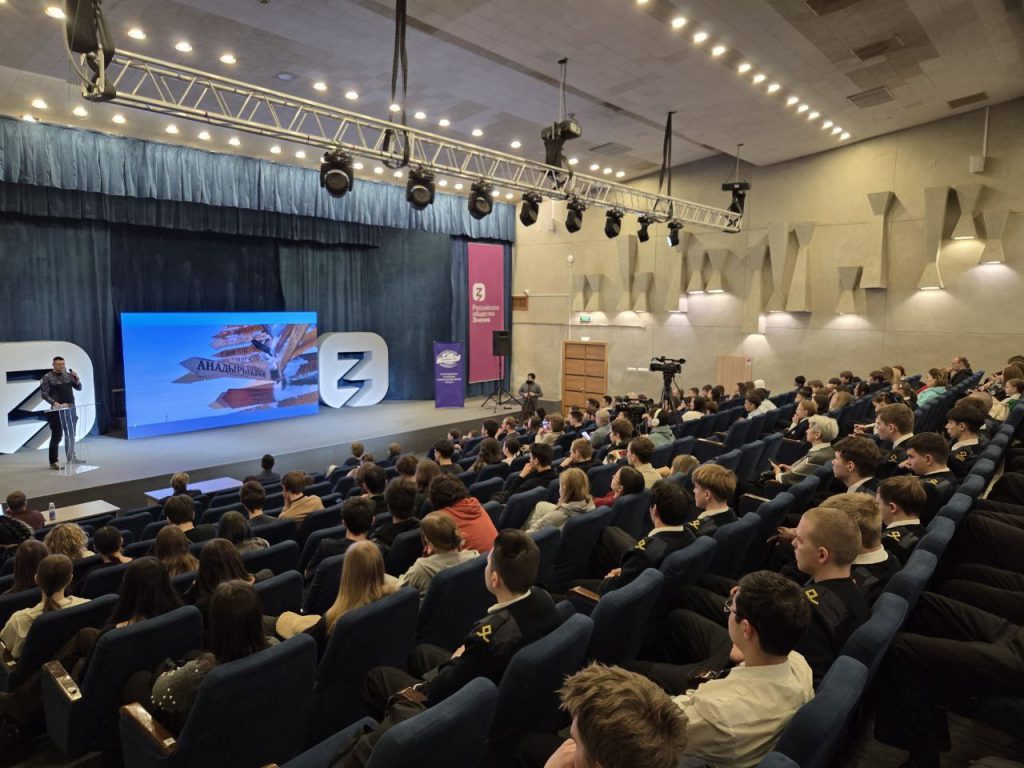
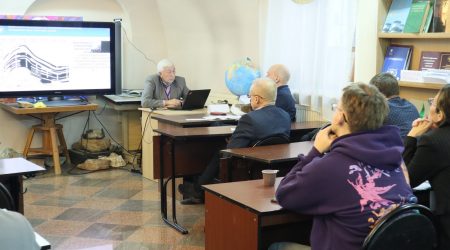
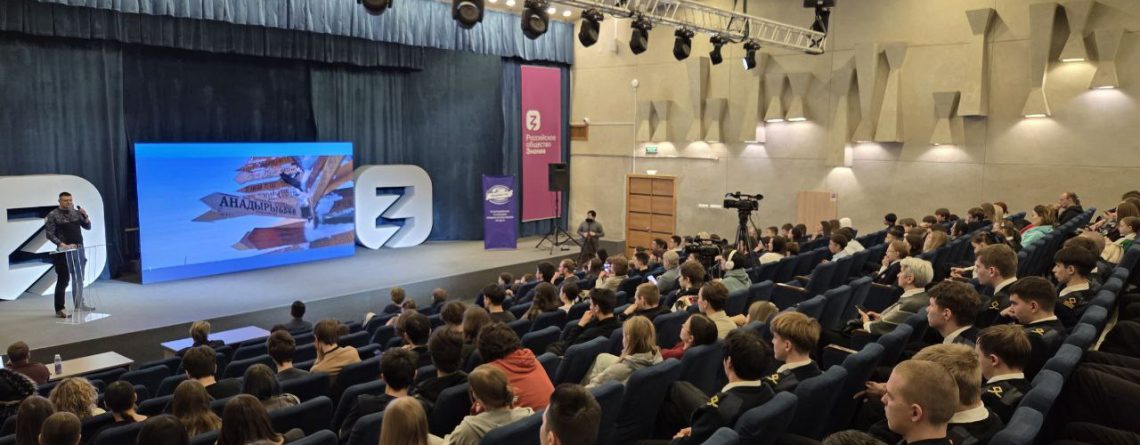
Students and schoolchildren of various ages, from first graders to eleventh graders, gathered at KFU’s UNICS sports complex to hear the fascinating story of how a doctor became a polar explorer and what challenges he faced while working at Russia’s Vostok Antarctic station.
The event was dedicated to the 206th anniversary of the discovery of the sixth continent. It was organized by KFU’s Department of Youth Policy together with the Youth Center of the Russian Geographical Society of the Republic of Tatarstan, the university’s Seven Rhumbs tourism club, and the Russian Knowledge Society.
Rustam Farkhullin, head of the RGS Youth Center and senior lecturer at the Department of Theory and Methodology of Geographical and Environmental Education at the Institute of Geology and Petroleum Technologies, reminded the audience that on January 28, 1820, a Russian circumnavigation on the sloops Vostok and Mirny, led by Fabian (Faddey) von Bellingshausen and Mikhail Lazarev, discovered Antarctica. The only scientist on the team was astronomer Ivan Simonov from Kazan University, who later became a professor and rector here.
“You probably think the era of great geographical discoveries is over? In fact, our Earth still holds many mysteries yet to be solved. They relate to the structure and properties of continents and various objects on our planet,” noted Andrey Teryokhin, Deputy DIrector for Academic Affairs at our Institute.
He expressed gratitude to the guest who found time to meet with the young audience and wished the students to be energized and inspired to dream new dreams.
At the beginning of the conversation, Shipulin noted that a year ago, when he returned from the expedition, he had already spoken at KFU about his journey. This time, with many elementary and middle school students in the audience, the speaker tried to make his narrative as simple and understandable as possible.
He explained how he joined the Antarctic expedition, how preparation for life in extreme conditions went, and what difficulties they faced reaching their destination.
The polar explorer illustrated his story with numerous photographs and videos. Young listeners watched with delight the dolphins Fyodor captured on camera accompanying the ship carrying expedition participants to the shores of the white continent, as well as seals and penguins – residents of Antarctica.
“We walked upside down there,” the narrator joked, hinting that in the Earth’s Southern Hemisphere, many things are “opposite” from the Northern Hemisphere. He reminded the audience that June, July, and August are winter months there, and the night sky looks completely different from ours: it displays different constellations, and the lunar crescent always faces the “opposite” direction.
Recalling life at the station, Shipulin said he not only performed his direct duties – conducting medical examinations, treating polar explorers, and advancing research – but also worked as a driller, helped equip the new module of Vostok station, and mined snow.
“There are no lakes near the station, so water was obtained from snow. It was compressed like concrete, so sometimes we had to saw it,” he explained.
Fyodor admitted that adapting to life after the expedition was harder than spending a year in Antarctica, where living conditions were extremely harsh: air temperature sometimes dropped below -80°C, atmospheric pressure was below 500 mm Hg, causing constant oxygen deficiency, and polar explorers suffered from mountain sickness (altitude hypoxia). Additionally, the white continent has very strong solar radiation and frequent snowstorms.
After the meeting concluded, the Antarctic conqueror tried to answer numerous questions in detail. Participants were interested in how many Russian ships travel to the shores of the sixth continent, what polar explorers eat, how they cope with stress, and how they maintain good fitness.
In response to the question of why he went to the South Pole, Shipulin said: “Every person searches for themselves. I found myself. After the expedition, I realized that I’m not a coward, but I am afraid!”
Ilya Perevyortov, a master’s student at the Institute of Management, Economics and Finance, asked the traveler what types of doctors can work at polar stations.
“I’m a doctor, studying healthcare management, and I’ve already been on a polar expedition, but it was near the North Pole, in the Arctic Ocean. Meetings with people like Fyodor Shipulin are very important for youth. Will I go to Antarctica myself? I don’t know, for now I want to learn more about it,” he shared with journalists after the event.
Seventh-grader Adel Nureyev from KFU’s IT-Lyceum said he learned a lot of new things about the sixth continent at the meeting.
“I would really like to visit Antarctica. I probably couldn’t endure a whole year in such harsh conditions, but I would gladly go for one month,” the schoolboy said. “I was especially interested to learn about the fauna that lives there. I love penguins very much, but I’ve never seen them.”
Notably, KFU’s Vice-Rector for Earth Sciences Danis Nurgaliev is also a participant of multilple polar expeditions, and he has frequently shared his impressions from them.